
A Contractor’s Honest Answer
By Yaniv Taragano, Owner of Taragano Design and Build, a Diamond Certified design-build firm serving Walnut Creek, Lafayette, Orinda, Moraga, Danville, Alamo, Pleasant Hill, Concord, San Ramon, and surrounding East Bay communities.

A completed whole-home exterior remodel by Taragano Design and Build, a Diamond Certified design-build contractor serving Walnut Creek, Lafayette, Moraga, Danville, and San Ramon.
A contractor agreement is the single document that decides how your remodel actually goes. The short answer: a good contractor agreement includes a detailed scope of work, a milestone-based payment schedule, clear change order terms, who supplies which materials, permit responsibility, and warranty coverage. The rest of this article explains each one, and how to spot trouble before you sign.
A contractor agreement does more than make things official, it sets the tone for the whole project. A clear, detailed agreement keeps expectations aligned, decisions documented, and both sides on the same page. And because in remodeling something unexpected almost always comes up, a good contract turns those moments into simple conversations instead of disagreements.
After more than a decade in this industry, I’ve learned which contractor agreement clauses matter most, and what a fair agreement looks like from the inside. My goal here is to walk you through it, so you can sign your next contract with confidence. Let me start with the job that taught me the biggest lesson of my career.
The Flooring Lesson That Changed My Contracts
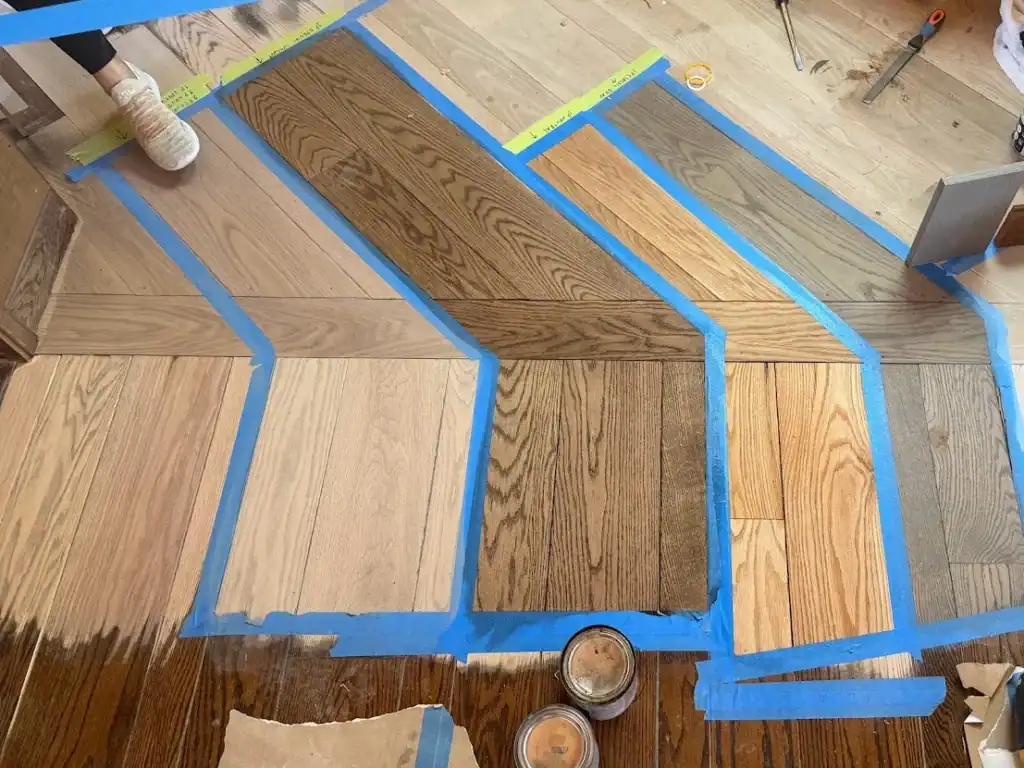
Testing hardwood stain samples on-site before finishing – the kind of detail a clear flooring scope of work spells out in advance.
Years ago, we signed a contractor agreement in Danville that said, simply: demolish the existing floor and install new flooring. Straightforward, right?
Then the customer’s materials arrived: raw, unfinished hardwood. Suddenly “install flooring” meant sanding and staining too. And the manufacturer’s instructions were clear: level the subfloor or void the warranty. Serious extra work, never priced into the job.
The customer understood he’d made the change, and we resolved it with a change order. But I went home and rewrote every contractor agreement we use. Today, our flooring scope states explicitly that sanding, staining, and leveling are not included; if needed, they’re an extra charge.
This is a good example of what clear wording does: it sets the right expectations for both sides, so nobody gets surprised.
The Sections Every Contractor Agreement Needs
Every contractor agreement covers the same basic ground – the difference is how clearly it does it. Every contractor agreement covers the same basic ground; the difference is how clearly it does it. When you read through an agreement, here’s what you should find:
- What exactly is being built: the scope, the materials, and just as important, what’s not included.
- When you pay, and for what: a payment schedule tied to finished work.
- What happens when something changes, because on a remodel, something will.
- Who’s buying what: your shopping list and the contractor’s, in writing.
- Who handles the permits: for us, that’s always the contractor, and we never start without one.
- Who stands behind the work: the warranty, meaning what’s covered, for how long, and by whom.
If any of those are missing or fuzzy, that’s your cue to ask questions before you sign.
Contractor Agreement Red Flags That Make Me Cringe
After years of remodeling homes in Walnut Creek, Lafayette, Moraga, Danville, and San Ramon, here’s what I tell homeowners to watch for:
- A vague scope of work: one or two sentences, no materials, no specifics. It’s the setup for a change-order ambush.
- A lowball price with the real cost hidden in inevitable “extras.”
- No clarity on who supplies what.
- Requests for money outside the payment schedule, whether for materials, for payroll, or for anything else.
- No license, no bond, no insurance. Verify with the CSLB before you sign anything.
Now let’s walk through the sections that matter most, and what they look like when they’re done right.
A Detailed Scope of Work Is Your Best Protection
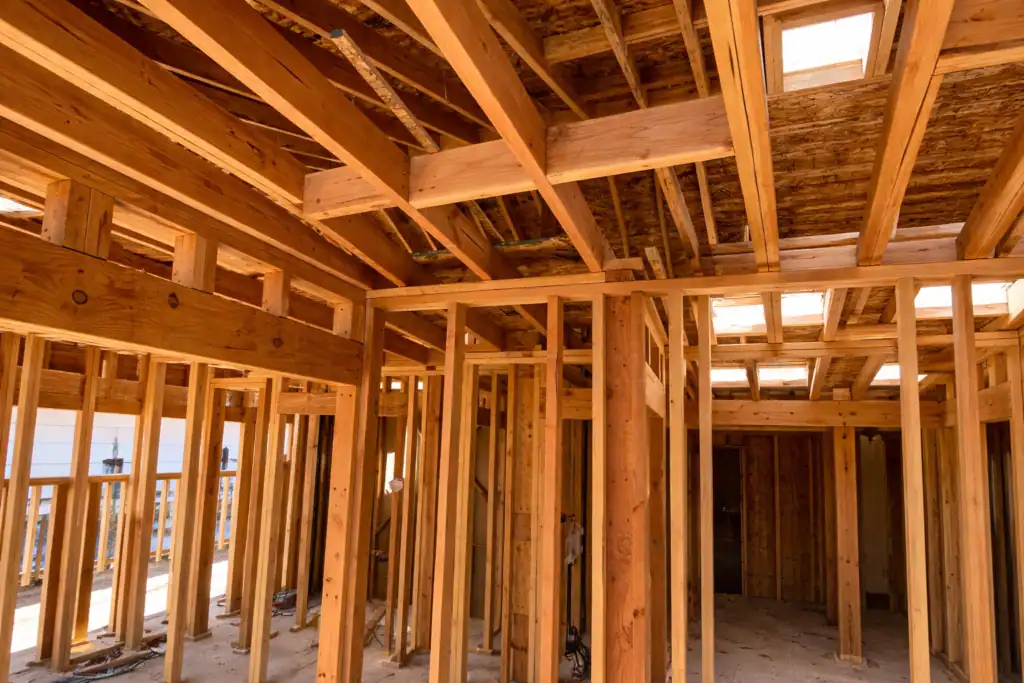
A whole-home remodel during framing and rough construction – the stage where a detailed scope of work matters most.
First, what is a scope of work? It’s the part of the contract that describes, in plain words, everything the contractor is going to do, room by room, step by step: what gets demolished, what gets built, what materials go where, and what’s not part of the job. Think of it as the instruction manual for your project. If it’s not written in the scope, don’t assume it’s included.
That matters because a vague scope is the number one trick of low-bid contractors: win the job with a cheap price, then bury you in change orders once demolition starts and it’s too late to walk away.
What does “detailed” mean in practice? On a recent whole-home remodel (a kitchen relocation, four bathrooms, new flooring, a 200-amp panel upgrade, and a small addition), our scope-of-work addendum ran to more than 150 numbered line items.
The primary bathroom alone had 25 steps, from “cover work areas as needed” through waterproofing, tile, and final cleanup. When the scope is that specific, there’s nothing left to argue about later.
Payment Schedules: Pay for Work That’s Done, Never Work That’s Promised
California caps the down payment on a home improvement contract at $1,000 or 10% of the contract price, whichever is less, per CSLB’s own guidance for consumers. A contractor who asks for more up front isn’t negotiating; he’s breaking the law.
We break every project into milestones, listed in the contract next to the scope of work, and we only ask for payment when a stage is complete. The customer walks the work, receives an invoice, and if they’re happy, they pay. If they’re not happy, we fix it first, and then they pay.
Our payment schedule also ties several milestones directly to passing city inspections: plumbing, electrical, framing, mechanical. Think about what that means: the homeowner’s money is never far ahead of verified, inspected work. At no point are they exposed for more than a small slice of the project.
Now the red flag: contractors asking for money to “buy materials,” or to “pay the guys because it’s Friday.” I’ve heard too many stories of homeowners who paid for materials and the contractor simply vanished. A fair schedule means you’re always paying for work already done and inspected, never for promises.
Change Orders: Where Good Contracts Earn Their Keep
Change orders happen on almost every remodel, and they’re not a bad thing; they’re how projects adapt. Finish materials often aren’t finalized at signing. Customers change their minds about tile, countertops, cabinets. Sometimes the city inspector requires changes to bring the home up to code.
Our process never varies: discuss the issue, give the customer everything they need to decide, agree on scope and price, and sign a written change order before the work happens. Every change order also states how many days it adds, so the completion date stays honest.
Timelines and Surprises Behind the Walls
With our experience, we’re usually ahead of schedule, and the secret isn’t magic, it’s preparation. We confirm material delivery times before we start, so the project never stalls waiting on a backorder. And because we never start without a permit, city processing happens before your home is torn open, not during.
Surprises behind the walls do happen. When we find one, we give the customer three options for dealing with it, without ever sacrificing safety. The option they choose becomes a change order, with the added days written into it. A fair contract admits that some delays (permits, inspections) are outside anyone’s control, while committing the contractor to managing everything that is.
Owner-Supplied Materials: Your Choices, Our Knowledge

A finished kitchen remodel with custom island and skylights – cabinets, countertops, and fixtures selected by the homeowner with our guidance.
Our contracts draw a clean line, and I’ve written a full guide on what’s included in construction costs if you want the deep version: the customer supplies the finish materials; we supply all the rough materials. The materials list is spelled out item by item, from vanities, cabinets, hardware, fixtures, and appliances to tile, countertops, paint, and doors, with a catch-all line covering anything not specified. Nothing is left to memory or a handshake. And here’s my philosophy: it’s your home and your decision, so we’ll never push you toward a purchase.
But we will advise you. We share our experience, our sources, and guidance built on years of customer feedback. If a product looks like the wrong choice for the job, we raise the flag and suggest alternatives. We share contractor discounts when we can. I hate hearing “I wish I knew,” so we make sure our customers never have to say it. That collaborative approach is a big reason for our five-star reviews across Google, Houzz, Yelp, and HomeAdvisor.
Warranty: Know Who Covers What
Our contracts include a one-year warranty on our workmanship, meaning the installation and everything behind the walls: electrical, plumbing, framing. Materials are covered by the manufacturer’s warranty. Damage from things we never touched falls under the homeowner’s insurance. That three-way split (workmanship, manufacturer, insurance) should be spelled out in any contractor agreement you sign, so there’s no confusion about who to call a year later.
Before You Sign a Contractor Agreement, Check the Record

A completed bathroom remodel with freestanding tub, tile shower, and double vanity – covered by our one-year workmanship warranty.
If you do only one thing before signing, do this: don’t hire someone just because a friend recommended them. Check the record yourself: license, insurance, bond, reviews, background.
Everything I’ve described is verifiable about us, and it should be about anyone you hire. Taragano Design and Build holds an active CSLB General Building license (#1143420), is bonded, and carries $2 million in liability insurance plus workers’ compensation. We’re Diamond Certified, rated Highest in Quality and Helpful Expertise, BBB A-rated, with a BuildZoom score in the top 2% of more than 336,000 licensed California contractors.
I don’t list those credentials to brag. That’s exactly the homework you should do on any contractor, including us. A contractor who’s proud of his record makes it easy to check; one who dodges the question is telling you something too.
A contractor agreement is just paper. What gives it meaning is a contractor who has learned enough lessons to know what belongs on it, and who treats you as a partner, not an adversary.
Frequently Asked Questions
How much of a deposit can a contractor ask for in California?
By law, the down payment on a home improvement contract is capped at $1,000 or 10% of the contract price, whichever is less. Every payment after that should be tied to completed work. If a contractor asks for more up front, or for money outside the payment schedule to “buy materials,” treat it as a reason to stop and verify his license, bond, and insurance before you go further.
Do I need a written contractor agreement for a remodel in Walnut Creek, Lafayette, or Danville?
Yes. California requires a written home improvement contract for any project over $500, under Business and Professions Code Section 7159 – no matter which city you’re in. A handshake deal isn’t just risky; it’s not legal.
How do I verify a contractor’s license in Contra Costa County?
Look up the license number on the CSLB website – it takes two minutes. Then check that they’re bonded and insured, and read their reviews on Google, Houzz, and Yelp before you sign.
Can I cancel a contractor agreement after I sign it?
Usually yes. Under California law, unless you negotiated the contract at the contractor’s own place of business, you have three business days to cancel a home improvement contract, and homeowners 65 and older have five business days. The contract itself must include a Notice of Cancellation form explaining that right. If the agreement you’re handed doesn’t contain one, that tells you something about who wrote it.
Does a contractor agreement have to include a start and completion date?
Yes. California requires a home improvement contract to state an approximate start date and an approximate completion date under headings with those exact words. A contract with no dates at all is not just a warning sign, it is missing something the law requires. This is also why every change order we write states how many days it adds, so the completion date stays honest instead of quietly sliding.
How much of a deposit can a contractor ask for in California?
By law, the down payment on a home improvement contract is capped at $1,000 or 10% of the contract price, whichever is less. Every payment after that should be tied to completed work.
Do I need a written contractor agreement for a remodel in Walnut Creek, Lafayette, or Danville?
Yes. California requires a written home improvement contract for any project over $500, under Business and Professions Code Section 7159 – no matter which city you’re in. A handshake deal isn’t just risky; it’s not legal.
How do I verify a contractor’s license in Contra Costa County?
Look up the license number on the CSLB website – it takes two minutes. Then check that they’re bonded and insured, and read their reviews on Google, Houzz, and Yelp before you sign.
Ready to talk about your project?
Call or text Taragano Design and Build at (925) 388-6353 for a complimentary consultation, or visit taraganobuild.com. We’re a Diamond Certified design-build firm (CSLB #1143420) serving Walnut Creek, Lafayette, Orinda, Moraga, Danville, Alamo, Pleasant Hill, Concord, San Ramon, and surrounding East Bay communities.
Following East Bay remodeling costs and permits? Add Taragano Design and Build as a preferred source in Google Search.
***This article is for general information and reflects one contractor’s experience; it is not legal advice. Consult an attorney about your specific contract.
