

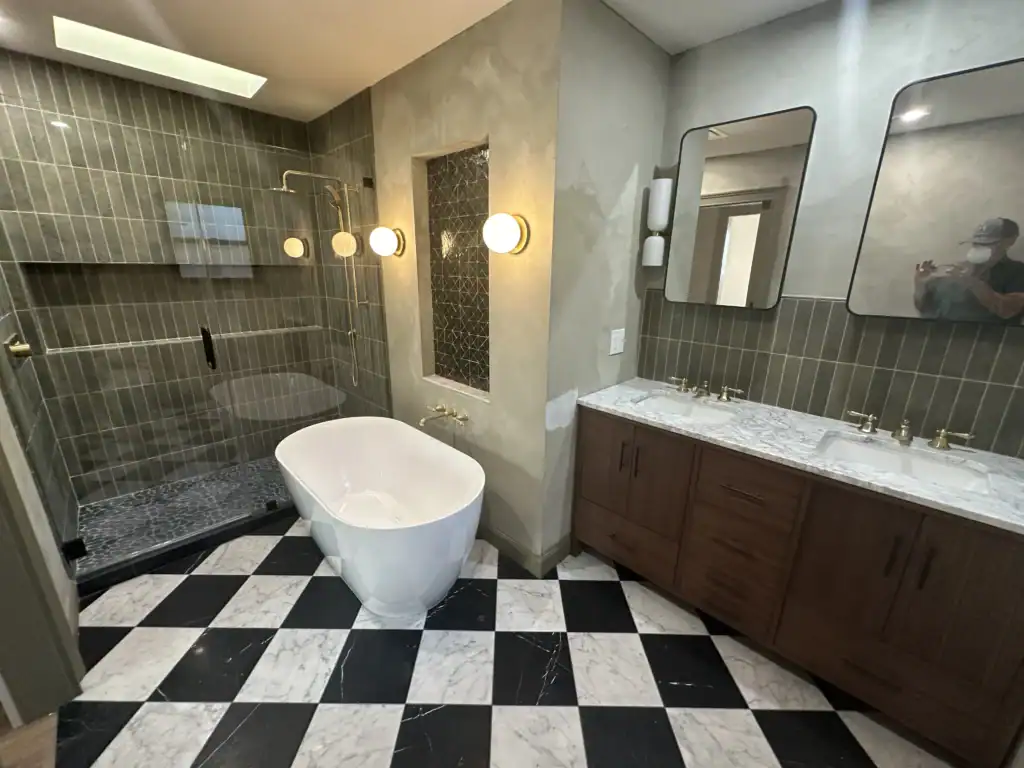
By Yaniv Taragano, Founder, Taragano Design and Build, CSLB #1143420
Is $10,000 Enough for a Bathroom Remodel?
No. For a complete master bathroom remodel in the East Bay, $10,000 is not enough. A full primary bathroom renovation in Contra Costa County starts somewhere around $20,000 to $25,000 and can reach $50,000, $75,000, or well past $100,000, depending on scope, existing conditions, and finish level.
That is the honest answer, and I would rather give it to you in the first paragraph than three meetings into a project.
But a $10,000 bathroom remodel is not nothing. It is roughly a shower budget rather than a bathroom budget, and a properly built shower is the single most valuable thing you can buy with that money. The rest of this article explains why, exactly what $10,000 covers, and what it does not.
The short version
$10,000 buys one thing done right, not a whole room.
n our market a shower rebuild in an existing bathroom generally starts around $10,000 to $15,000.
A full primary bathroom remodel starts around $20,000 to $25,000
in Walnut Creek, Lafayette, Orinda, Moraga, Danville, Alamo, Pleasant Hill, Concord, and San Ramon.
Yes, you need a permit.
Opening walls, changing a shower valve, or altering drain lines is permit work in every Contra Costa city.
Spend the money behind the tile.
Waterproofing, the valve, and the supply system are the things you cannot fix later without demolition.
Everything in front of the tile can wait.
Vanity, mirror, lighting, toilet, and glass can all be added later without reopening a finished wall.
First, Go Price the Materials
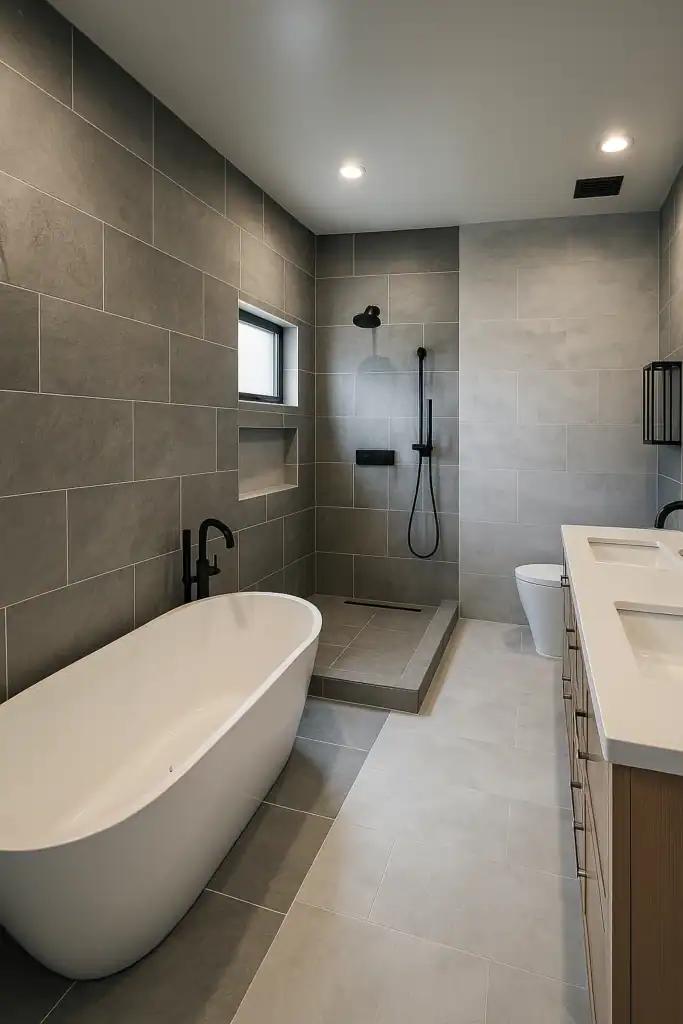
Here is a test I give homeowners who tell me they have $10,000 for a bathroom.
Go shopping. Price the tile you actually want, the vanity, the countertop, the shower valve and trim, the shower head, the toilet, the mirror, the lighting, the exhaust fan, the glass enclosure, the paint, the hardware, and the accessories.
Add it up.
Most people are surprised. A significant number discover that their $10,000 is gone before a contractor has removed a single screw.
That is the point of the exercise. It reframes the question from “can I remodel my bathroom for $10,000” into “what is the gap between the bathroom I want and the money I have.” Only one of those questions leads somewhere useful.
What a $10,000 Bathroom Remodel Actually Buys
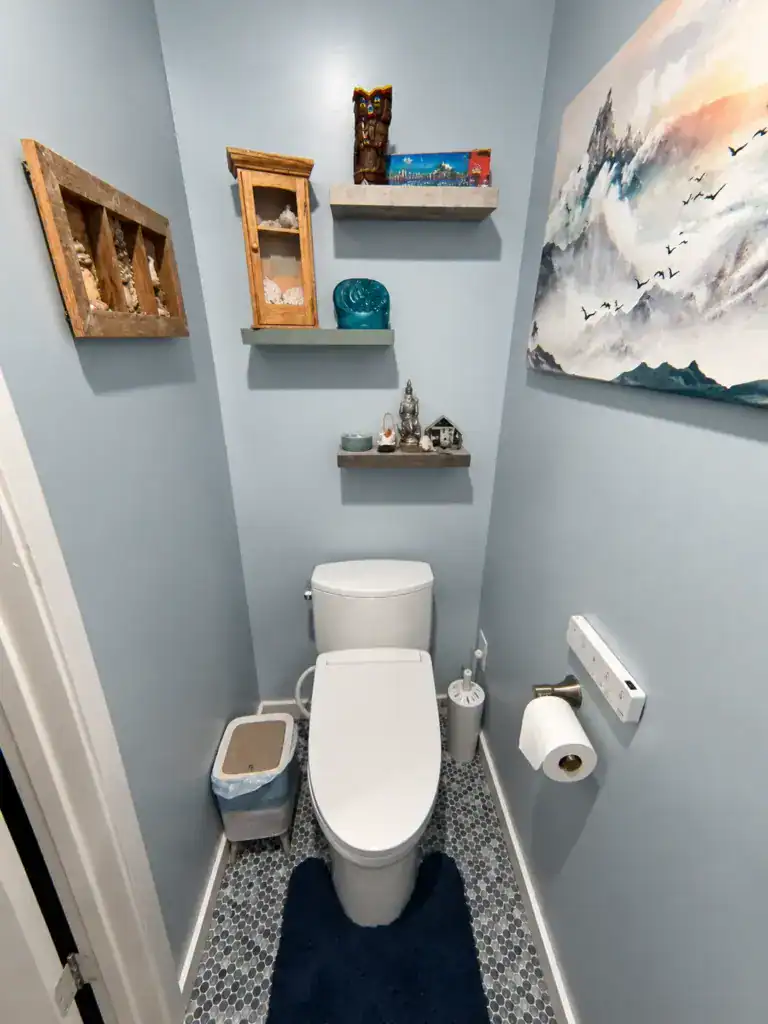
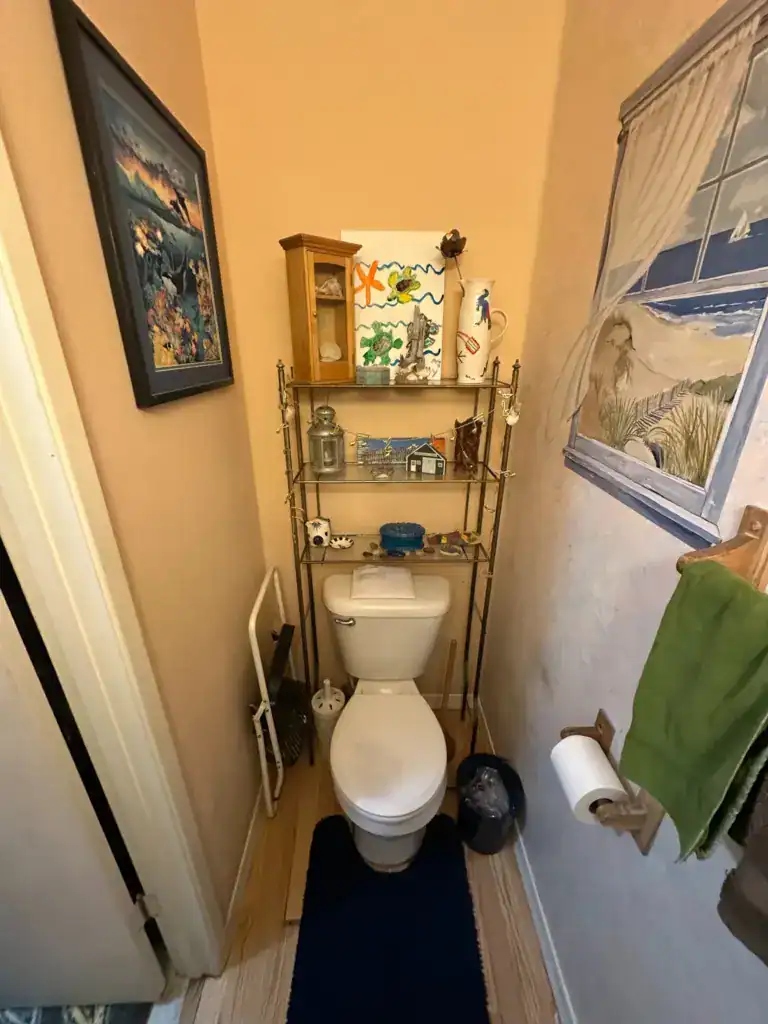
A shower. Built correctly, in a bathroom that already exists, in roughly its current location.
In our market, a shower rebuild of that kind generally starts around $10,000 to $15,000, and it moves up from there based on tile selection, layout, and what we find once the walls are open. That is a starting range for a straightforward scope, not a quote for your bathroom.
| Included in a $10,000 shower rebuild | Not included |
|---|---|
| Demolition of the shower area and disposal | Vanity, countertop, faucet, and mirror |
| New drain and supply lines within the existing wet wall | Toilet |
| New pressure balance or thermostatic shower valve | Flooring outside the shower |
| Substrate and a complete waterproofing system | Glass enclosure |
| Tile setting labor at a straightforward layout | Lighting, exhaust fan, and paint |
| The permit and inspections | Premium or oversized tile |
And the things that push a $10,000 bathroom remodel past budget quickly: rot or damaged framing behind the old tile, moving the drain, a curbless entry, large-format or intricate tile, and a niche with anything unusual about it.
This is where an honest conversation matters more than an optimistic one. If your existing bathroom is in decent shape and you want one part of it done properly, $10,000 is a real budget. If you were hoping it would cover the room, it will not, and no contractor can make it.
If the space you want as a bathroom is currently an office or a bedroom, none of this applies. You would be bringing water supply, drainage, electrical, and ventilation into a room that has never had them, which commonly runs closer to twice the cost of refreshing an existing bathroom of the same footprint. Building the room from scratch is closer to a home addition budget than a bathroom one.
Do You Need a Permit for a $10,000 Bathroom Remodel?
Yes, in almost every case. Homeowners are often surprised by this, and leaving it out of the budget is a common mistake.
Painting and like-for-like finish work generally do not require a permit. Opening walls, replacing a shower valve, changing drain lines, or touching wiring does. The City of Walnut Creek lists kitchen and bathroom remodels directly on its building permit FAQs as work requiring a permit, and puts painting, papering, and similar finish work on the exempt list. The neighboring cities work the same way.
The good news is that a shower rebuild in an existing bathroom usually does not require full plan check. Walnut Creek handles this kind of scope as an over-the-counter permit, which is a review category rather than a walk-in visit, since the city now takes all permit applications through its online portal and no longer issues permits in person. It says over-the-counter permits are typically reviewed within three to five business days rather than the several weeks a plan-check project takes.
Expect roughly $300 to $700 in city fees for a shower rebuild in an existing bathroom, though this varies by city and by the valuation you declare. Fees in most Contra Costa cities are calculated from your stated construction cost rather than charged as a flat rate. Concord, for example, determines construction cost from the applicant’s estimate of all permitted work including materials and labor, and specifically notes that work not requiring a permit, such as paint and flooring, does not have to be included in that figure.
For scale on the other end, a bathroom permit issued in Lafayette in January 2026 covering a shower rebuild, a vanity and toilet upgrade, a new lift pump, and an exhaust fan carried a declared valuation of $30,000. That is a full bathroom, not a shower.
Budget for the permit rather than hoping to avoid it. Unpermitted shower work is one of the more common items that surfaces during a resale inspection, and correcting it later costs far more than the permit would have.
Why $10,000 Does Not Stretch Further
The most common budget failure I see does not start with a contractor. It starts with a photograph.
A homeowner finds an image online and tries to reproduce it inside a budget that was never realistic for that design. They see the tile, the floating vanity, the lit niche, the frameless glass, the finished room. What the photograph does not show is everything behind it.
Take full tile coverage on the floor and several walls. That is not simply more tile. It is more surface preparation, more layout and cutting, more waterproofing in wet areas, more edge and transition detailing, and considerably more skilled labor.
The same is true of an oversized niche. A simple recessed niche is routine. A large niche with unusual angles, multiple shelves, integrated lighting, and custom tile detailing is a small project inside your project.
Individually, each of those decisions feels minor. Together they add tens of thousands of dollars. That is the mechanism behind the gap between what homeowners expect and what they are quoted, and I have written separately about what is actually included in construction costs for exactly this reason.
Where the Money Has to Go
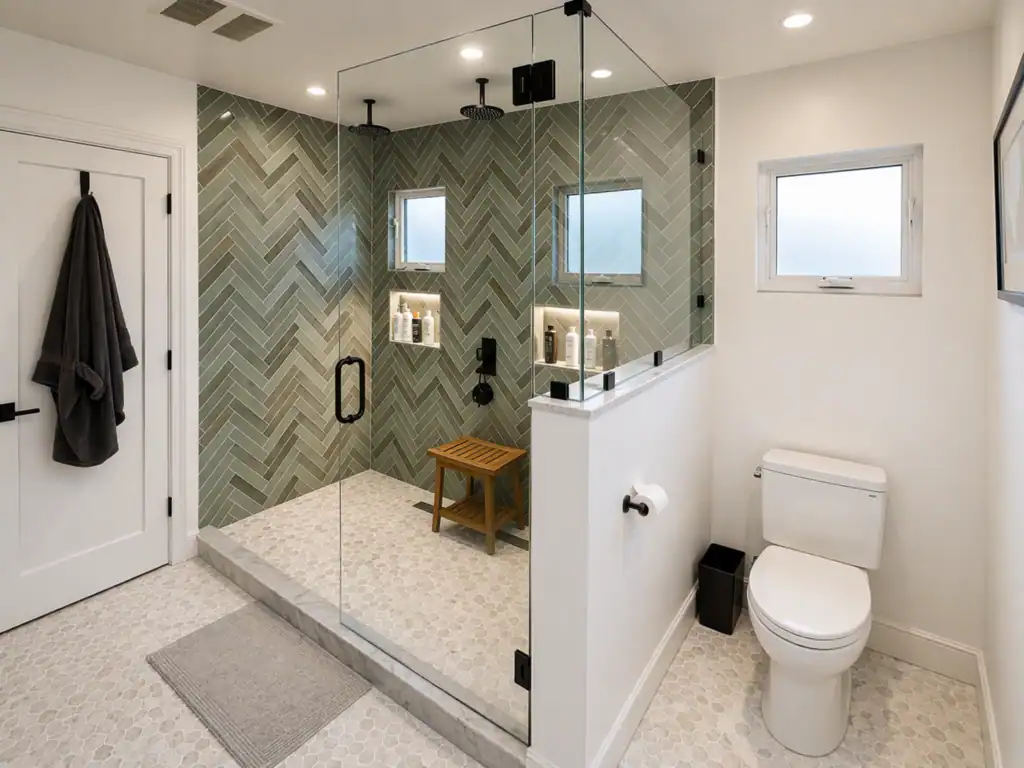
If $10,000 is the limit, spend it on what is difficult and expensive to reach later. Everything behind the tile qualifies. Almost nothing in front of it does.
Waterproofing
This is the one place in a bathroom where I will not negotiate on cost.
The tile is what you see. The waterproofing is what protects the structure of your house, and nobody will ever compliment you on it. A failure behind the tile does not stay in the bathroom. Water travels through floor framing and into the ceilings, walls, and rooms below.
If your budget is tight, buy less expensive tile and keep the waterproofing exactly as it should be. Never the reverse.
The Shower Valve
Homeowners sometimes ask whether they can keep the existing valve and just change the shower head. I understand the logic, and the code frequently answers the question before I do.
California Plumbing Code Section 408.4 requires showers and tub-shower combinations to have individual control valves of the pressure balance, thermostatic, or combination type that provide scald and thermal shock protection, limited to 120 degrees. A water heater thermostat does not satisfy it. Older valves often do not comply, and once the wall is open and an inspector is looking at it, the decision may not be yours to make.
Note that this section was renumbered in the 2025 California Plumbing Code, which took effect January 1, 2026. If you are reading older guidance that cites CPC 408.3, that number now refers to showerhead flow rate.
Even where an existing valve does comply, replacing it while the wall is open costs a few hundred dollars. Replacing it afterward means opening a finished tiled shower.
What Can Wait
A frameless glass enclosure is a good example of a legitimate delay. Glass is usually measured after tile work is complete, because the fabricator needs exact finished dimensions. There is a natural gap between finishing the shower and installing the glass, and you can live with a curtain and rod during that gap. You can live with it for a year if you need to.
The same staged approach works for the vanity, the mirror, the lighting, and the toilet. None of those require reopening a finished wall. The shower does.
Cheap Today, Expensive Tomorrow
The real value of an open wall is the chance to address things that become impractical once it closes. Worth considering while the bathroom is open:
- An electrical outlet near the toilet for a future bidet seat
- A recessed medicine cabinet, with power inside it where appropriate
- Improved ventilation, sized for the room and ducted to the exterior rather than into an attic
- Sound insulation, if the far side of the wall is a bedroom or hallway
- Blocking for future grab bars, which costs almost nothing now and is the foundation of any accessible or aging-in-place bathroom later
Sound insulation is the item homeowners forget most often. It costs very little while the wall is open and it is a demolition project afterward.
One more detail that gets overlooked until an inspector raises it. Under California Residential Code Section R324.4.5, glazing in walls containing or facing a tub or shower is treated as a hazardous location where the bottom exposed edge sits less than 60 inches above the standing or walking surface, with an exception for glazing more than 60 inches horizontally from the edge of the fixture. In practice, that often means an existing bathroom window has to be replaced with tempered glass as part of the work. The City of Berkeley’s bathroom code compliance checklist, updated in March 2026 for the 2025 code cycle, lays out the same requirement alongside the rest of what an inspector looks for.
This section also moved in the 2025 code. It was R308.4.5 in the 2022 California Residential Code. A lot of handouts and contractor websites still cite the old number.
It is a small example of a larger point. An experienced contractor is not just building what is drawn. They are catching the requirements that were never on the drawing.
Choose the Contractor Before You Choose the Tile
If I could change one thing about how homeowners approach bathrooms, it would be the order of operations. The tile selection is not the first decision.
A bathroom is a high-risk room because water is involved and most of the risk is concealed. When something goes wrong, it is rarely a cracked tile. It is a waterproofing failure or a plumbing leak that eventually damages parts of the house that had nothing to do with your renovation.
Look for a contractor who is properly licensed, bonded, and insured, who has real experience with bathrooms specifically, who can explain the waterproofing system they use and why, and who will put the scope in writing. Every California license number can be verified for free through the Contractors State License Board. If you want to know what should be documented before work starts, I wrote about what belongs in a contractor agreement separately.
On a small budget this matters more, not less. A $10,000 bathroom remodel has no contingency in it. There is no room to pay twice for the same wall.
How We Work
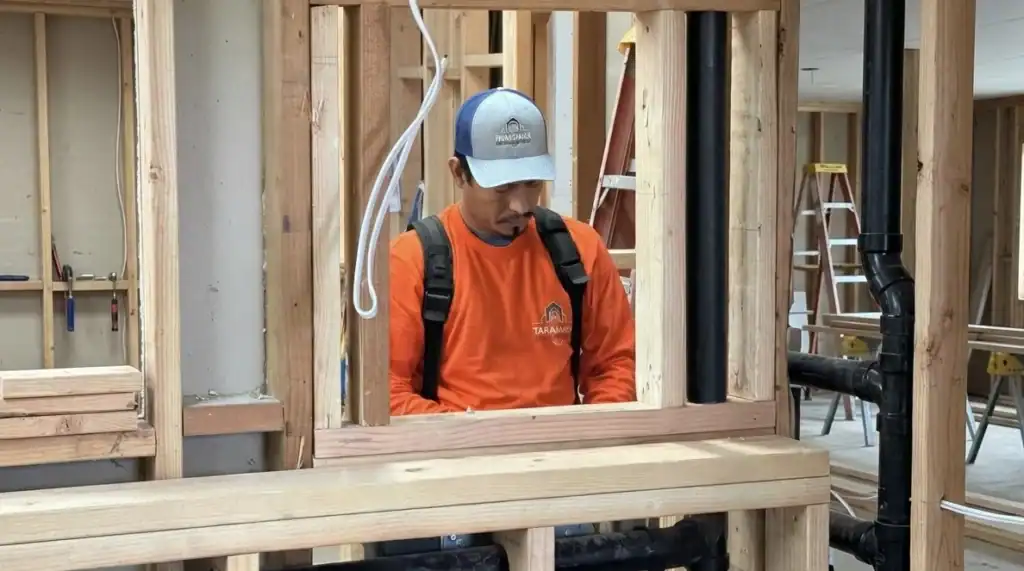
We are a design-build firm, so design, engineering, permitting, and construction sit under one contract with one party accountable. On a small project the practical benefit is simple: the people selecting materials and the people responsible for installing them correctly are the same organization, so nothing gets specified that cannot be built for the budget. I made the longer case for that structure in should I hire one contractor or multiple.
Taragano Design and Build has been building in Contra Costa County since 2014. We are Diamond Certified and BBB accredited, we hold CSLB #1143420, and we back our work with a one-year workmanship warranty. We serve Walnut Creek, Lafayette, Orinda, Moraga, Danville, Alamo, Pleasant Hill, Concord, San Ramon, and the surrounding East Bay. You can see the work on our bathroom remodeling page.
If you are working with a defined budget and want a straight answer about what it will and will not cover, call us at (925) 388-6353, email info@taraganobuild.com, or request a consultation.
Frequently Asked Questions
Is $10,000 enough for a bathroom remodel?
Not for a complete renovation in the East Bay. A full primary bathroom remodel in Contra Costa County generally starts around $20,000 to $25,000 and can exceed $100,000. Ten thousand dollars is closer to a shower budget than a bathroom budget.
What can I actually get for a $10,000 bathroom remodel?
A properly built shower in an existing bathroom, in roughly its current location. That covers demolition, a new drain and valve, substrate, a complete waterproofing system, tile labor at a straightforward layout, and the permit. It does not cover the vanity, toilet, flooring, glass enclosure, lighting, or fan.
How much does a shower rebuild cost in the East Bay?
A shower rebuild in an existing bathroom, in its current location, generally starts around $10,000 to $15,000 and moves up based on tile selection, layout, and what is found once the walls are open. Site conditions on a specific property can move that figure.
Do I need a permit for a shower rebuild?
In almost every Contra Costa city, yes. Opening walls, replacing a shower valve, or altering drain lines requires a permit. It is usually handled as an over-the-counter permit rather than a full plan check, and Walnut Creek says that category is typically reviewed within three to five business days.
How much is a bathroom permit in Walnut Creek or Concord?
Expect roughly $300 to $700 for a shower rebuild in an existing bathroom. Most Contra Costa cities calculate the fee from your declared construction valuation rather than charging a flat rate, so the number moves with the size of the job.
How long does a shower-only rebuild take?
Generally two to three weeks of active work, plus lead time on tile and fixtures and the wait for glass, which is measured after the tile is finished. Door to door, four to six weeks is a realistic expectation.
Does reusing my existing vanity save money?
Less than most people expect. The labor to remove, protect, store, and reinstall it remains. What you save is the purchase price of a new vanity, not the installation cost.
Should I replace the shower valve during a remodel?
Yes, and often the code requires it. CPC 408.4 requires scald and thermal shock protection from a pressure balance or thermostatic valve, limited to 120 degrees. Older valves frequently do not comply, and replacing one behind finished tile later costs many times what it costs now.
Will I need a tempered glass window in my bathroom?
Often, yes. CRC R324.4.5 treats glazing in a wall containing or facing a tub or shower as a hazardous location when the bottom exposed edge is less than 60 inches above the standing surface. Existing single-pane bathroom windows frequently have to be replaced with safety glazing as part of the work.
Where should I never cut costs?
Waterproofing, the valve and supply system, ventilation, and the contractor. These are concealed, hard to correct later, and responsible for nearly every serious bathroom failure I have been called in to repair.
Can I do a bathroom remodel in phases?
Yes, and on a $10,000 budget it is usually the right call. Build the shower correctly first, because it is the only part that requires opening walls. Add the vanity, mirror, lighting, toilet, and glass enclosure as the budget allows, none of which require reopening finished work.
The Bottom Line
If you have $10,000, do not try to make a $50,000 bathroom look like it cost $10,000. Pick the part of the room that is hardest to redo and build that part correctly. Then add the vanity, the lighting, and the glass when the budget allows.
What you cannot see behind the tile matters more than everything you can see in the finished photograph.
Ready to talk about your home? Call or text Taragano Design and Build at (925) 388-6353 for a complimentary consultation, or visit taraganobuild.com. We’re a Diamond Certified design-build firm (CSLB #1143420) serving Walnut Creek, Lafayette, Orinda, Moraga, Danville, Alamo, Pleasant Hill, Concord, San Ramon, and surrounding East Bay communities.
Yaniv Taragano is the founder of Taragano Design and Build, a licensed design-build general contractor (CSLB #1143420) serving Walnut Creek, Lafayette, Orinda, Moraga, Danville, Alamo, Pleasant Hill, Concord, San Ramon, and the surrounding East Bay since 2014. Pricing in this article reflects Contra Costa County market conditions as of September 2026 and is a starting point rather than a quote. Permit fees and code requirements change; confirm current requirements with your city before relying on them for a project decision.
